
Global Payment Regulation Updates in 2026
By HighRiskPay Editorial Team · Updated 2026-08-30
Merchants navigating global payment regulation updates, including emerging PSD3 payment regulations, benefit from HighRiskPay’s network of 10+ onshore and offshore acquiring banks, PCI-aligned payment gateways, and 3D Secure 2.0 fraud tools. Together, these support compliant multi-currency processing, cross-border stability, and settlement cycles of 1–3 business days across regulated industries worldwide.
Payment regulatory compliance across global markets remains complex and fragmenting, making risk-aware payment structuring essential for regulated industries such as gambling. Online gaming, forex and trading, CBD, and subscription businesses. HighRiskPay addresses this through PCI-aligned gateways, multi-currency and cross-border processing. A diversified network of 10+ onshore and offshore acquiring banks, delivering predictable 1–3 business day settlement cycles for regulated industries.
Cross-border payment regulations continue to shift as jurisdictions tighten fraud prevention, PCI alignment, and dispute-management standards. HighRiskPay structures merchant accounts through more than 10 onshore and offshore acquiring banks, applying real-time transaction monitoring, 3D Secure 2.0. Rule-based filters so compliance officers maintain approval performance and processing continuity across multiple regulatory regions.
Navigating Global Payment Regulatory Fragmentation in 2026
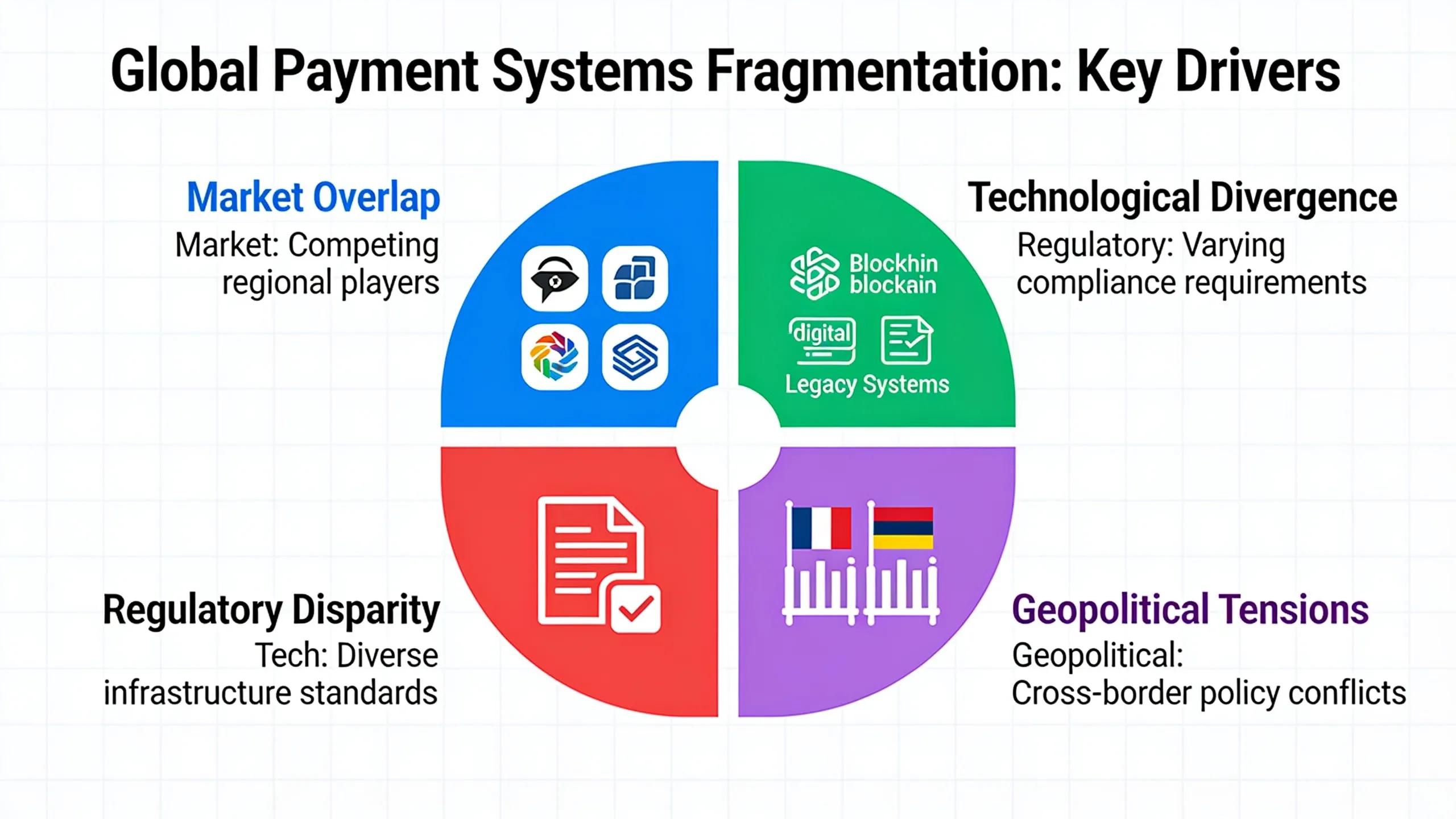
- Global payment regulation is fragmenting due to overlapping market, technological, regulatory, and geopolitical forces, forcing compliance teams to track changes across every jurisdiction they serve.
- Instant-payment rules vary widely by country — some market-driven, some government-mandated — so multi-jurisdictional operators must monitor compliance updates region by region rather than rely on one global rulebook.
- HighRiskPay reduces exposure to sudden regulatory or acquirer policy shifts by structuring merchant accounts across a diversified network of 10+ onshore and offshore acquiring banks.
- Layered risk tools — real-time transaction monitoring, 3D Secure 2.0, fraud screening, device fingerprinting, and rule-based filters — help merchants catch compliance issues before acquiring banks or regulators do.
- PCI-aligned gateways paired with multi-currency and cross-border processing support predictable 1–3 business day settlement cycles even as individual markets tighten requirements.
- Risk-aware payment structuring and transparent onboarding are designed to help merchants stay ahead of shifting acquirer requirements and regulatory changes rather than reacting after the fact.
Why Is Global Payment Regulation Fragmenting So Fast?
No single force explains the splintering. Market pressure, new technology, shifting rules, and geopolitics are colliding at once, and the combination leaves compliance teams chasing a moving target. Cross-border payments grow slower, costlier, and less transparent as a result, and merchants operating in multiple jurisdictions absorb that friction first.
What role does geopolitics play in payment fragmentation?
Geopolitics deserves more attention than it typically gets. States now treat payment infrastructure as a strategic asset, building rival systems that sit outside the traditional dollar-based order. For risk directors, this means payment regulation is no longer purely a compliance matter. It is increasingly a political one, shaped by alliances and rival infrastructure rather than uniform global standards.
Why do instant-payment rules differ so much by country?
Instant-payment adoption illustrates the split clearly. Some countries let market forces set the pace. Others mandate rapid rollout through government directive. That divergence forces multi-jurisdictional operators to track compliance updates separately for every region where they process transactions, rather than relying on one global rulebook.
Three forces compound the problem:
- Market-driven adoption in some regions versus mandated timelines in others
- Overlapping, sometimes contradictory law changes across regulatory bodies
- Geopolitical fragmentation layered on top of technical and regulatory shifts
HighRiskPay addresses this instability by structuring merchant accounts across a diversified network of onshore and offshore acquiring banks, reducing dependence on any single system as global rules keep shifting.

How Should Compliance Officers Track Law Changes?
Structured processes, not scattered alerts, keep compliance teams ahead of shifting rules. Multi-jurisdictional e-commerce businesses face payment regulation that evolves across every market they touch. Reactive monitoring costs approval rates and settlement stability. HighRiskPay builds tracking into the merchant relationship itself, rather than leaving operators to chase updates alone.
Risk-aware payment structuring and transparent onboarding form the foundation. These practices are designed specifically to help merchants stay ahead of shifting acquirer requirements and compliance updates as they emerge, rather than scrambling after the fact.
What does the onboarding process actually track?
Engagements follow a defined sequence built for visibility at every stage:
- Business review and eligibility assessment
- Risk assessment and acquiring alignment
- Merchant account setup
- Integration and testing
- Go-live with ongoing optimization
Each stage feeds the next, so law changes affecting acquiring banks or regional rules surface early rather than after processing disruption.
Why does acquirer diversification matter for compliance tracking?
Reliance on a single acquirer leaves merchants exposed when that bank adjusts its risk appetite or regulatory posture. HighRiskPay’s structuring approach is built to improve approval performance, raise processing limits, and reduce dependence on any one acquiring relationship. Multi-currency and cross-border processing, paired with PCI-aligned gateways, gives operators a settlement structure that holds steady even as individual jurisdictions tighten requirements. Compliance officers gain a partner tracking these shifts alongside them, not a static account left unmonitored.

Compliance officers tracking law changes are watching three named standards in particular:
What Risk Tools Keep Merchants Ahead Of New Rules?
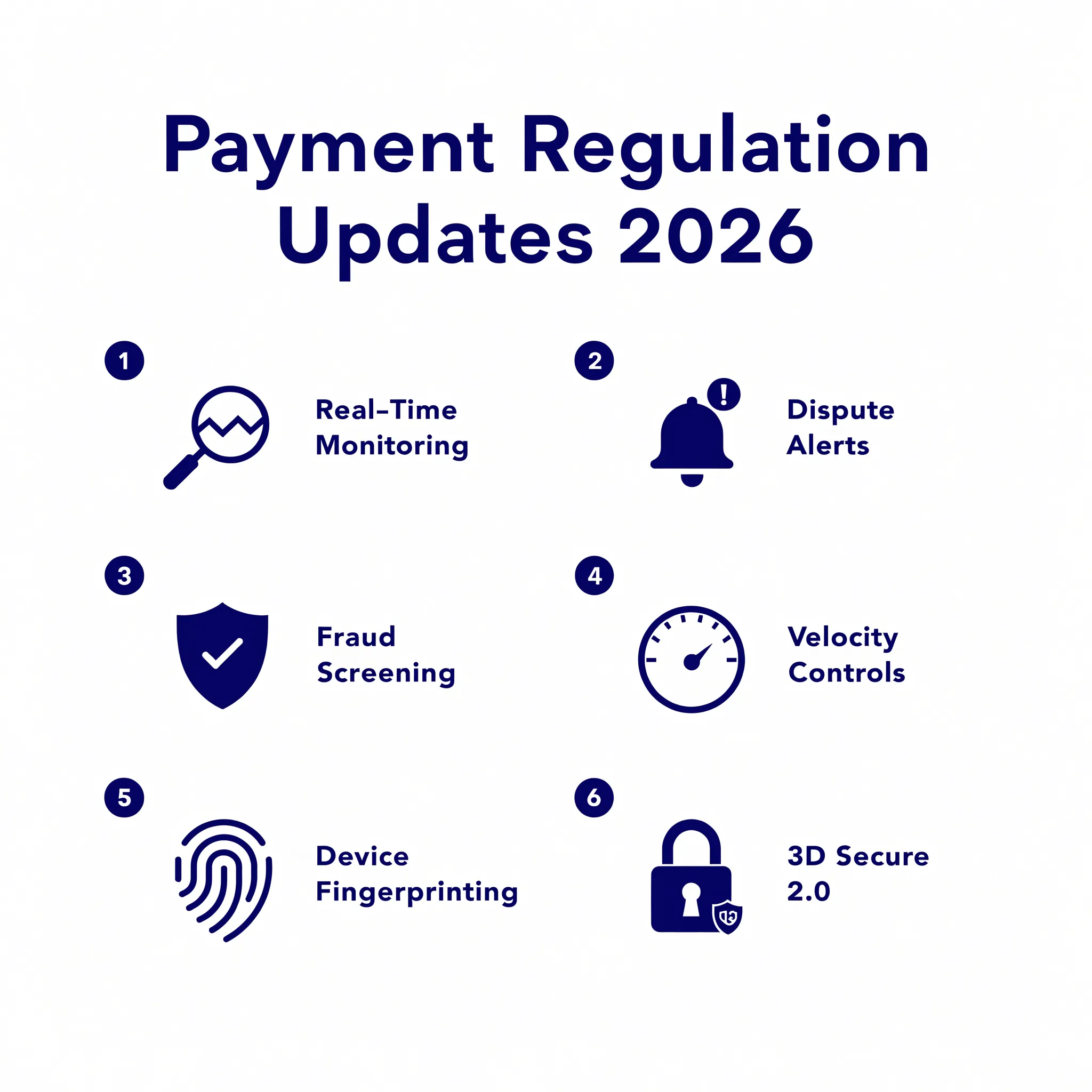
Seven layers of risk technology separate merchants who stay compliant from those who lose their processing privileges overnight. HighRiskPay equips clients with real-time transaction monitoring, early dispute and chargeback alerts, advanced fraud screening, velocity controls, device fingerprinting, rule-based filters, and 3D Secure 2.0. Together, these tools catch problems before regulators or acquiring banks do. Waiting for a bank to flag an issue costs merchants their accounts; catching it internally preserves them.
- Real-time transaction monitoring — flags suspicious activity as it happens, before it escalates into a chargeback or acquirer review.
- Early dispute and chargeback alerts — surface potential disputes ahead of formal chargebacks, giving merchants time to intervene.
- Advanced fraud screening — filters high-risk transactions and demonstrates active risk management to acquiring partners and regulators.
- Velocity controls — limit unusual transaction frequency or volume patterns that often signal fraud or account abuse.
- Device fingerprinting — identifies repeat bad actors across sessions, even when other identifying details change.
- Rule-based filters — apply configurable, merchant-specific criteria to catch compliance issues automatically.
- 3D Secure 2.0 — adds an authentication layer that reduces fraud liability while keeping checkout friction low.
Dedicated high-risk merchant account compliance tooling pairs with advanced fraud-prevention integrations and multi-currency payment processing support. Enterprise-grade fraud and chargeback protection come standard, alongside settlement cycles of one to three business days. Predictability matters here — sudden holds or delayed payouts often signal deeper compliance gaps that regulators eventually notice.
Why does fraud screening matter for regulatory compliance?
Fraud screening does more than block bad transactions; it demonstrates active risk management to acquiring partners and regulators. Merchants who show consistent monitoring records face fewer account reviews.
How does merchant account diversification reduce compliance risk?
Access to more than 10 high-risk-friendly acquiring banks limits exposure to any single institution’s policy shifts. This structure supports scaling across Shopify, WooCommerce, Magento, BigCommerce, PrestaShop, and custom API integrations without disrupting approval rates.
Which Regulated Industries Face the Most Payment Compliance Scrutiny?
Payment regulation updates rarely land evenly. Some sectors face tighter fraud-prevention, licensing, and dispute-management scrutiny than others because of what they sell or how they bill customers. HighRiskPay structures merchant accounts across a broad range of these sectors, so compliance patterns that emerge in one industry often signal what is coming for adjacent ones.
FAQ
What is PSD3 and why does it matter for high-risk merchants?
PSD3 payment regulations represent part of the broader wave of global payment regulation updates reshaping compliance requirements for merchants processing across multiple jurisdictions. As these rules emerge alongside evolving fraud-prevention and PCI standards, merchants benefit from working with a network of PCI-aligned payment gateways and onshore and offshore acquiring banks built to keep pace with regulatory change. HighRiskPay’s structuring approach — spanning 10+ acquiring relationships, 3D Secure 2.0 authentication, and multi-currency processing — helps merchants adapt to PSD3 and similar frameworks without disrupting settlement cycles or approval performance across regulated industries.
What does PCI-aligned payment processing actually involve?
PCI-aligned payment gateways ensure transaction data is handled according to established security standards, reducing exposure to fraud and compliance violations. Within HighRiskPay’s structure, PCI alignment pairs with multi-currency and cross-border processing capabilities across a network of 10+ onshore and offshore acquiring banks. This combination supports predictable settlement cycles of one to three business days even as individual markets tighten requirements. For compliance officers, PCI-aligned processing is a baseline safeguard that works alongside layered risk tools like 3D Secure 2.0 and real-time transaction monitoring to keep merchant accounts stable.
How do settlement cycles stay predictable amid regulatory change?
Settlement cycles of one to three business days remain achievable because HighRiskPay pairs PCI-aligned gateways with multi-currency and cross-border processing across a diversified network of more than 10 onshore and offshore acquiring banks. Spreading risk across multiple acquiring relationships means a single bank’s policy shift or regional regulatory change is less likely to disrupt payouts. Predictability matters for compliance officers because sudden holds or delayed settlements often signal deeper compliance gaps that regulators eventually notice, making consistent settlement timing a useful indicator of a merchant account’s underlying compliance health.
What is high-risk merchant account compliance and why is it different?
High-risk merchant account compliance covers the fraud prevention, PCI alignment, and dispute-management standards that regulated industries must meet to keep processing privileges intact. Because high-risk merchants face tighter scrutiny than standard accounts, HighRiskPay builds dedicated compliance tooling into every account — real-time transaction monitoring, advanced fraud screening, device fingerprinting, and rule-based filters — alongside enterprise-grade chargeback protection. Paired with settlement cycles of one to three business days and access to more than 10 acquiring banks, this structure helps merchants demonstrate active risk management to regulators rather than reacting only after an account review begins.
Which platforms can integrate with HighRiskPay’s payment processing?
HighRiskPay’s structure supports scaling across Shopify, WooCommerce, and custom API integrations without disrupting approval rates. Because merchant accounts are spread across more than 10 high-risk-friendly acquiring banks, platform integrations benefit from the same layered risk tools — including 3D Secure 2.0, velocity controls, and rule-based filters — that protect standalone accounts. This flexibility matters for compliance officers managing multi-jurisdictional e-commerce operations, since it allows consistent fraud screening and PCI-aligned processing regardless of which platform a merchant uses to sell.
How does cross-border payment regulation affect approval rates?
Cross-border payment regulations tighten fraud prevention, PCI alignment, and dispute-management standards at different speeds across jurisdictions, which can pressure approval rates for merchants relying on a single acquiring relationship. HighRiskPay offsets this by structuring accounts across a diversified network of 10+ onshore and offshore acquiring banks, applying real-time transaction monitoring and 3D Secure 2.0 to maintain approval performance even as individual regions adjust their rules. This diversification, combined with PCI-aligned gateways and multi-currency processing, gives compliance officers a more stable foundation for approval continuity across regulated markets.
Conclusion
Global payment regulation updates in 2026 continue to reshape how compliance officers and risk directors manage cross-border payment regulations, PSD3 payment regulations, and shifting PCI and fraud-prevention standards across every jurisdiction they serve. HighRiskPay’s payment regulatory compliance approach — a diversified network of 10+ onshore and offshore acquiring banks, layered risk tools like 3D Secure 2.0 and real-time transaction monitoring, and PCI-aligned gateways supporting multi-currency and cross-border processing — keeps settlement cycles of one to three business days predictable even as individual markets tighten requirements. This structure gives merchants in regulated industries a foundation for high risk merchant account compliance that holds up under sudden acquirer or regulatory shifts rather than reacting to them after the fact. For merchants ready to strengthen their compliance posture ahead of the next regulatory shift, HighRiskPay’s risk-aware payment structuring offers a practical next step.