
Regulatory Monitoring Highrisk: Regulatory Monitoring High-Risk
By HighRiskPay Editorial Team · Updated 2026-07-20
For regulatory monitoring highrisk, compliance teams rely on structured jurisdiction guides to navigate overlapping regulatory frameworks across global markets. The Financial Industry Regulatory Authority (FINRA) publishes mandatory monitoring standards that define surveillance obligations, reporting thresholds. Enforcement protocols, giving compliance professionals a definitive reference point for building jurisdiction-specific monitoring programs aligned with local regulatory requirements.
Regulatory monitoring and jurisdiction guides equip compliance teams with the structured discipline needed to identify, implement. Demonstrate adherence to laws across every market they serve. Covering regulated environments such as the FDA, SEC, FINRA, the Financial Conduct Authority. NERC, spanning industries from financial services and healthcare to technology and energy.
Regulatory monitoring requires compliance teams to track applicable laws across every market a merchant serves, detecting rule changes before they create processing risk. HighRiskPay structures payment infrastructure around high-risk-friendly acquiring banks, aligning merchant accounts with jurisdiction-specific requirements to sustain Dedicated Merchant IDs: Approval Rates & Stability continuity across regulated industries globally.
Strategic Advantages of Regulatory Compliance Monitoring
Compliance monitoring tracks regulatory requirements and detects changes through ongoing systematic processes daily.
Regulations function as protective guardrails for organizational operations, employee health, and public transparency standards.
Proactive compliance frameworks transform regulatory intelligence into competitive business advantages for strategic advisors.
Modern compliance professionals shift from reporting roles to strategic business advisor positions within organizations.
Compliance monitoring tracks regulatory requirements and detects changes through ongoing systematic processes daily.
Regulations function as protective guardrails for organizational operations, employee health, and public transparency standards.
Proactive compliance frameworks transform regulatory intelligence into competitive business advantages for strategic advisors.
Modern compliance professionals shift from reporting roles to strategic business advisor positions within organizations.
What prerequisites must compliance teams establish first?
Compliance teams serving high-risk merchants must establish a structured foundation before any monitoring activity begins. Regulatory monitoring for high-risk businesses demands more than a checklist — it requires a formal discipline covering identification, implementation, monitoring. Demonstrated adherence across every applicable law, geography, and business model.
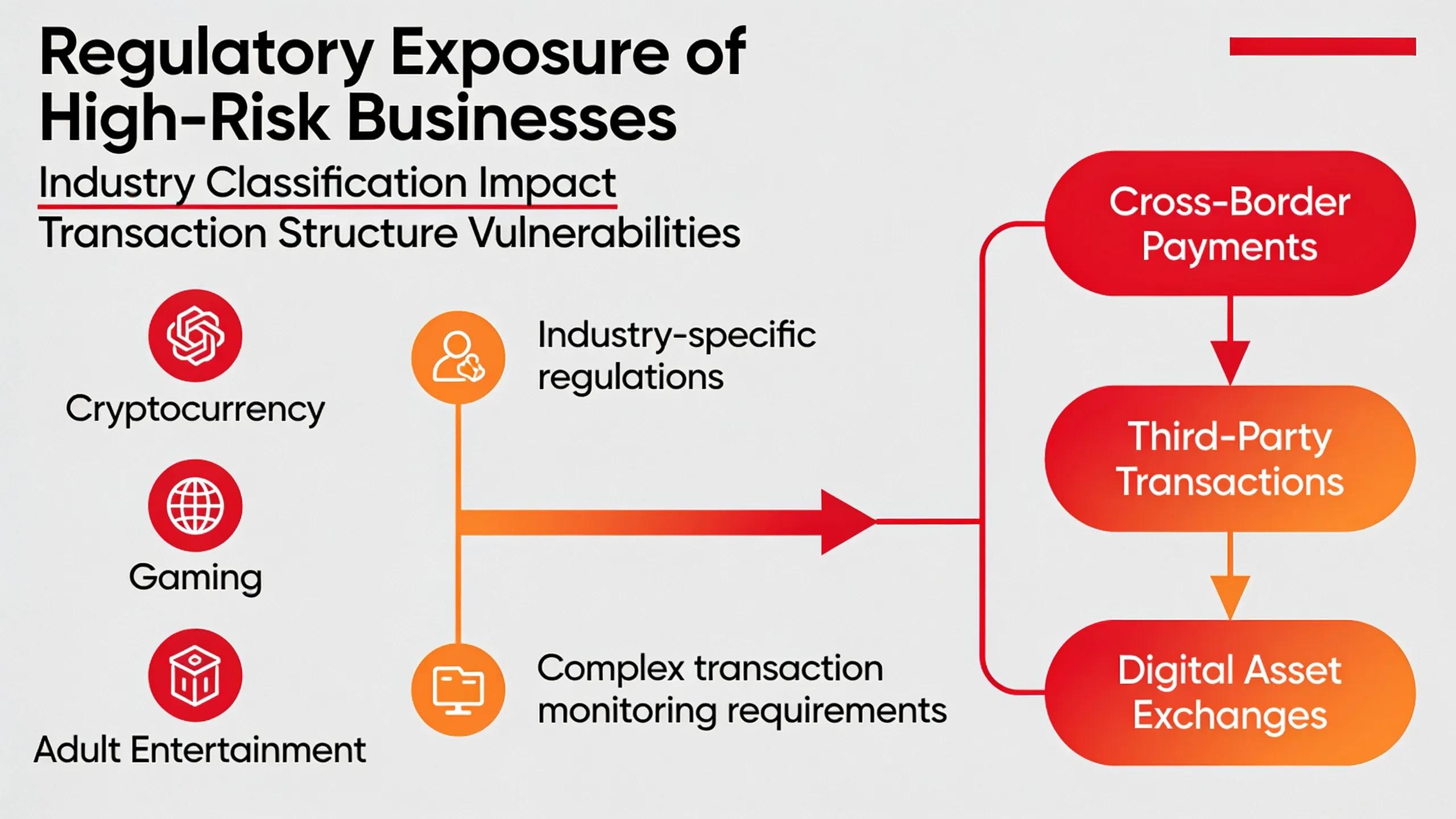
High-risk businesses carry unique regulatory exposure. Industry classification, transaction structure. Payments for Gambling & Online Gaming place these merchants outside standard compliance frameworks, meaning generic programs built for low-risk operators fail to capture the full obligation landscape.
Why does a high-risk business need a different compliance baseline?
High-risk jurisdiction updates affect merchants differently than standard businesses. Cross-border activity multiplies the number of applicable regulatory bodies, and a compliance baseline that ignores geographic scope leaves critical gaps unaddressed. Establish the full jurisdictional map before building any monitoring workflow.
What does a mature compliance program look like before monitoring starts?
A mature program moves beyond periodic audit readiness. Teams must maintain a continuous, monitored state of adherence — not a point-in-time snapshot reviewed once per quarter.
Before monitoring begins, compliance teams must complete these prerequisites in order:
Map every jurisdiction in which the business processes transactions.
Identify all external laws, regulations, and standards applicable to each market.
Document the business model, transaction structure, and industry classification.
Establish ownership for each compliance changes in payments obligation across the organization.
Map every jurisdiction in which the business processes transactions.
Identify all external laws, regulations, and standards applicable to each market.
Document the business model, transaction structure, and industry classification.
Establish ownership for each compliance changes in payments obligation across the organization.

Strategic Advantages of Regulatory Compliance Monitoring
Regulatory monitoring for high-risk businesses is the ongoing process of tracking regulatory requirements, detecting changes to applicable laws and standards, and ensuring operations remain within legal boundaries across every market served. cite-1 Teams that skip this discipline risk discovering a material change only after a failed audit, a shipment hold, or a market access block — consequences that are far costlier than the monitoring itself.
What are the prerequisites before building a jurisdiction monitoring workflow?
Compliance teams must first establish a structured foundation and then map every market in which the business processes payments. High-risk jurisdiction updates originate from multiple sources simultaneously — government agencies, industry bodies. International regulatory authorities — so teams need a complete picture of applicable rule-sets before monitoring can begin. cite-2 HighRiskPay supports merchants operating across multiple regions, recognizing that cross-border activity introduces layered jurisdictional obligations that demand specialist infrastructure. cite-3
How do teams structure the monitoring process step by step?
Execute jurisdiction-by-jurisdiction monitoring in the following order:
Inventory all active jurisdictions. List every country or region where the business accepts payments or holds a merchant account.
Identify governing authorities per jurisdiction. Assign the relevant government agencies, industry regulators, and international bodies to each market.
Establish dedicated tracking channels. Subscribe to official regulatory feeds, legislative alert services, and acquiring-bank compliance bulletins for each authority.
Log and categorize incoming changes. Record every update by jurisdiction, effective date, and operational impact.
Assess payment infrastructure impact. Determine whether compliance changes in payments processing — such as new licensing rules or transaction restrictions — require gateway reconfiguration or acquirer realignment.
Escalate and implement. Route material changes to the appropriate operational team and confirm resolution before the effective date.
Inventory all active jurisdictions. List every country or region where the business accepts payments or holds a merchant account.
Identify governing authorities per jurisdiction. Assign the relevant government agencies, industry regulators, and international bodies to each market.
Establish dedicated tracking channels. Subscribe to official regulatory feeds, legislative alert services, and acquiring-bank compliance bulletins for each authority.
Log and categorize incoming changes. Record every update by jurisdiction, effective date, and operational impact.
Assess payment infrastructure impact. Determine whether compliance changes in payments processing — such as new licensing rules or transaction restrictions — require gateway reconfiguration or acquirer realignment.
Escalate and implement. Route material changes to the appropriate operational team and confirm resolution before the effective date.

How do payment infrastructure choices affect ongoing compliance changes?
Payment infrastructure choices determine whether a merchant’s processing remains stable or collapses when compliance changes payments regulations shift. Merchants built on standard providers face account restrictions, frozen settlements, and sudden closures the moment risk or regulatory conditions change.
Why do standard providers fail high-risk merchants during regulatory shifts?
Standard payment providers are not designed to manage elevated risk profiles. When regulatory monitoring highrisk conditions tighten — whether through new licensing requirements, updated card-scheme rules. Jurisdiction-specific mandates — standard providers respond by restricting or terminating accounts. The merchant absorbs the disruption entirely.
What makes specialist infrastructure more resilient to regulatory change?
HighRiskPay structures payment infrastructure around stability, compliance alignment, and long-term processing success rather than short-term approvals that erode under pressure. cite-4 This approach positions merchants to absorb regulatory shifts without losing processing continuity.
Compliance is both a strategic goal and an operational necessity. Merchants that treat highrisk jurisdiction updates as infrastructure inputs — not afterthoughts. Build credibility with acquiring banks, card schemes, and end customers alike. Noncompliant merchants risk financial penalties and restrictions on their ability to operate.
Steps to align infrastructure with ongoing compliance requirements:
Audit current payment providers against the regulatory requirements of each active jurisdiction.
Identify single-acquirer dependencies that create closure risk during regulatory reviews.
Engage a specialist provider capable of routing through multiple compliant acquiring relationships.
Implement Security Incident Response & Advisories to detect compliance-relevant anomalies early.
Schedule periodic infrastructure reviews whenever jurisdiction-specific regulations are updated.
Audit current payment providers against the regulatory requirements of each active jurisdiction.
Identify single-acquirer dependencies that create closure risk during regulatory reviews.
Engage a specialist provider capable of routing through multiple compliant acquiring relationships.
Implement Security Incident Response & Advisories to detect compliance-relevant anomalies early.
Schedule periodic infrastructure reviews whenever jurisdiction-specific regulations are updated.
Regulatory monitoring and jurisdiction compliance demand sustained vigilance and structured governance. HighRiskPay equips compliance teams with the frameworks, tools, and acquiring partnerships necessary to navigate complex regulatory landscapes across global markets. By integrating real-time transaction oversight, advanced fraud screening. Multi-jurisdictional acquiring alignment into your payment infrastructure, your organization achieves both operational resilience and regulatory confidence. Long-term processing success depends on proactive compliance—not reactive remediation.
FAQ
What regulatory bodies do compliance teams need to monitor for high-risk merchants?
Compliance teams track requirements across bodies including the FDA, SEC, FINRA, the Financial Conduct Authority. NERC, spanning industries from financial services and healthcare to technology and energy.
Why do high-risk businesses require a different compliance baseline than standard merchants?
Industry classification, transaction structure. Cross-border activity place high-risk merchants outside standard compliance frameworks, meaning generic programs built for low-risk operators fail to capture the full obligation landscape. cite-3
What is the first step compliance teams take before building any monitoring workflow?
Teams establish the full jurisdictional map by identifying every jurisdiction in which the business processes transactions before constructing any monitoring workflow.